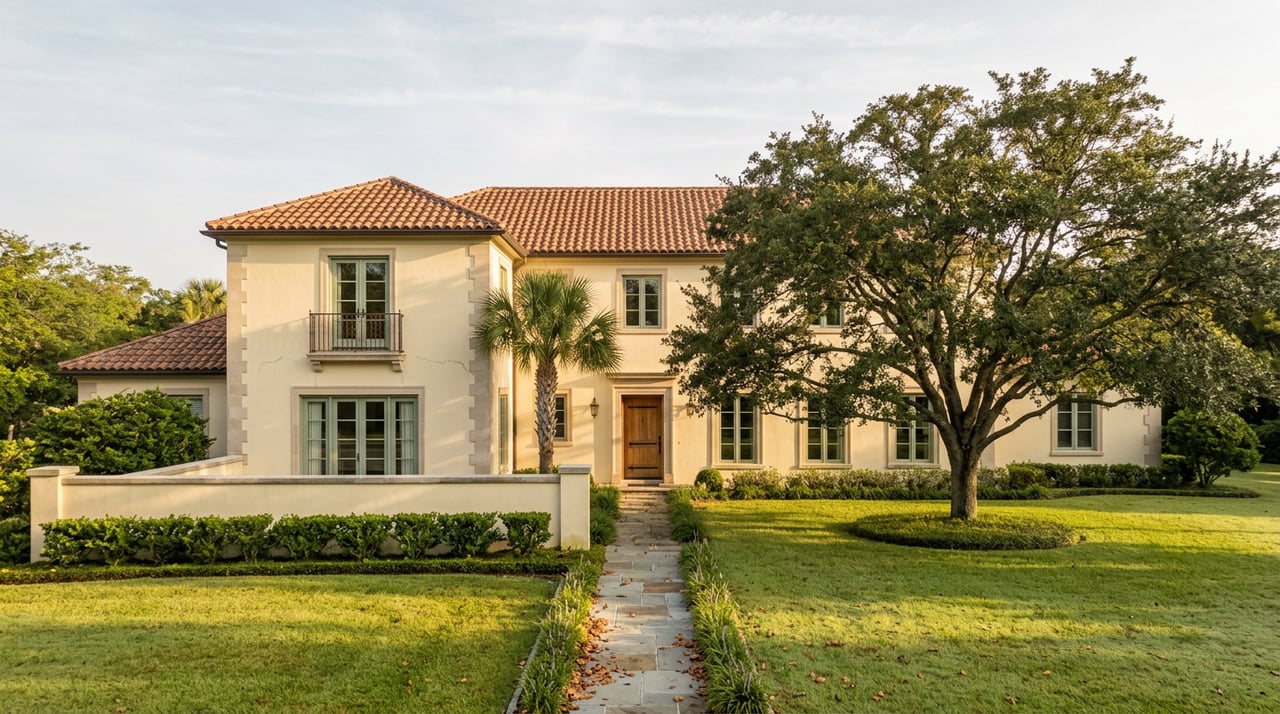
In Coral Gables, the Renovation Clock Costs the Same Whether You Spend $60,000 or $20 Million
September 10, 2026
September 10, 2026
Coral Gables closed some of its biggest deals this year on houses nobody plans to live in.
In April, Anthony Lopez, the insurance attorney engaged to former Real Housewives of Miami star Dr. Nicole Martin, paid $16 million for a Gables Estates property he intends to demolish. A month later, developer Alex Pirez and his firm Mocca Group closed on 665 Leucadendra Drive for $24.3 million, a roughly one-acre canal lot with 400 feet of water frontage and a 1999 house that isn't expected to stick around much longer. MasTec CEO José Mas paid about $14.9 million for a lot at 9175 Arvida Parkway with the same plan: clear it, build new.
None of these buyers were shopping for a fixer-upper. They were buying land, and treating the house on it as a cost of doing business. That pattern says something specific about how Coral Gables' design review process actually works, and it matters just as much to someone budgeting a $150,000 kitchen and primary suite addition as it does to a buyer writing an eight-figure check.
Almost any exterior change to a Coral Gables property, from a new roof to a repainted facade to a full teardown, has to clear the city's Board of Architects before a building permit can be issued. The board meets every Thursday morning, and a typical project needs both preliminary and final approval, judged against the design standards written into Section 5-100 of the city's zoning code, which weighs things like material compatibility and proportion rather than just code minimums.
That review isn't a formality you clear in one pass. Architects and permit consultants who work in the city describe most projects going through two to four submittal cycles before the board grants final approval, with each cycle running three to eight weeks, since the board almost always requests revisions on the first submittal. Plan check, the separate structural, electrical, plumbing and mechanical review that follows BOA approval, typically adds another six to twelve weeks. Local contractors who track the full arc from design through permit issuance put the realistic floor at seven to thirteen weeks before a permit is pulled, and that's before any construction begins.
Here's the part that doesn't show up in most renovation budgets: that seven-to-thirteen-week clock runs at roughly the same pace whether you're proposing a $60,000 window replacement or a five-bedroom rebuild. The board doesn't process small projects faster. It processes them through the same Thursday meeting, the same preliminary-and-final structure, the same design standards. A homeowner adding a family room addition and a developer building a spec mansion are, procedurally, standing in the same line.
This is where the incentive structure starts to explain the teardown pattern. Coral Gables offers something called the Med Bonus, a two-level program under Section 5-200 of the zoning code that rewards projects built in the city's Mediterranean architectural vocabulary with additional floor area ratio and, at the higher tier, extra stories. The bonus exists to keep new construction visually consistent with George Merrick's original vision for the city, and by most accounts it's working. It's also, functionally, an option that only pays off if you're building something big enough to use the extra square footage.
A renovation that keeps the existing footprint generally can't capture that upside. A full rebuild can. So a buyer who's already accepted the fixed cost of the review calendar, the same Thursday meetings, the same multi-cycle process, the same months of plan check, has a real financial reason to design toward the bonus rather than a modest addition. The review timeline is sunk either way. The Med Bonus is the difference between absorbing that cost for a like-for-like renovation and absorbing it for a project that adds real value.
That's a plausible piece of why Gables Estates keeps trading as land value rather than house value. It's not that buyers dislike the existing homes. It's that once you're committed to months of design review regardless of scope, the rational move is to make the project big enough that the review was worth it.
The neighborhood's headline numbers reflect this without explaining it. Over the three months ending in June 2026, the median sale price in Coral Gables was $1.7 million, up 2.2 percent from the same period the year before, while the median price per square foot climbed a sharper 15.3 percent over the same stretch. At the same time, the typical home took 99 days to sell, up from 85 days a year earlier. Prices per square foot rising faster than overall sale prices, alongside longer time on market, is consistent with a market where a growing share of value is sitting in the lot and the entitlement rather than in finished square footage that a buyer can walk through and evaluate in an afternoon.
If you're comparing two Coral Gables listings at similar prices, one might be a move-in-ready renovation and the other might be a dated house whose real value is the buildable lot underneath it plus whatever Med Bonus capacity a rebuild could capture. Those are different purchases with different holding costs, and the sale price alone won't tell you which one you're looking at.
If you're under contract, or about to be, on a Coral Gables property you intend to change in any way that touches the exterior, a few questions are worth answering before your inspection period closes rather than after:
Does every renovation in Coral Gables need Board of Architects approval? No. Interior-only work that doesn't change the exterior profile of the structure typically doesn't require BOA review. Anything visible from the street, from paint color to roof tile to window style, generally does.
How long should I actually budget before permits are issued? Plan for at least seven to thirteen weeks of design review and plan check on a straightforward exterior renovation, and expect the timeline to run longer if the board requests revisions, which it frequently does on first submittals, or if the property carries historic designation.
Does the state's new small-permit exemption help with Coral Gables projects? Only in a narrow way. It removes the building permit requirement for some purely cosmetic interior work under $7,500, but it doesn't touch electrical, plumbing, structural, or mechanical work, doesn't apply in flood hazard areas, and has no bearing on the city's separate design review requirement for exterior work.
If you're weighing a Coral Gables purchase against the renovation or rebuild you have in mind, the numbers on the listing sheet are only half the picture. The other half is a Thursday meeting schedule, a tree survey, and a bonus program that rewards scale. Martina Kanianska works through that math with buyers before they write an offer, not after they've already committed to a timeline they didn't plan for. Let's Connect.
Ready to find your dream home or make a smart investment? Reach out to Martina today! Passion ignites success - Martina’s love for real estate fuels her drive. She doesn’t just sell properties; she creates lasting connections. With Martina by your side, confidence is your greatest asset. Don’t wait, contact Martina now to start your journey towards success!
601 Brickell Key Dr. Miami, FL 33131