A $71.9 Million Sale on Munroe Drive Just Redefined What "Coconut Grove Price" Means
September 17, 2026
September 17, 2026
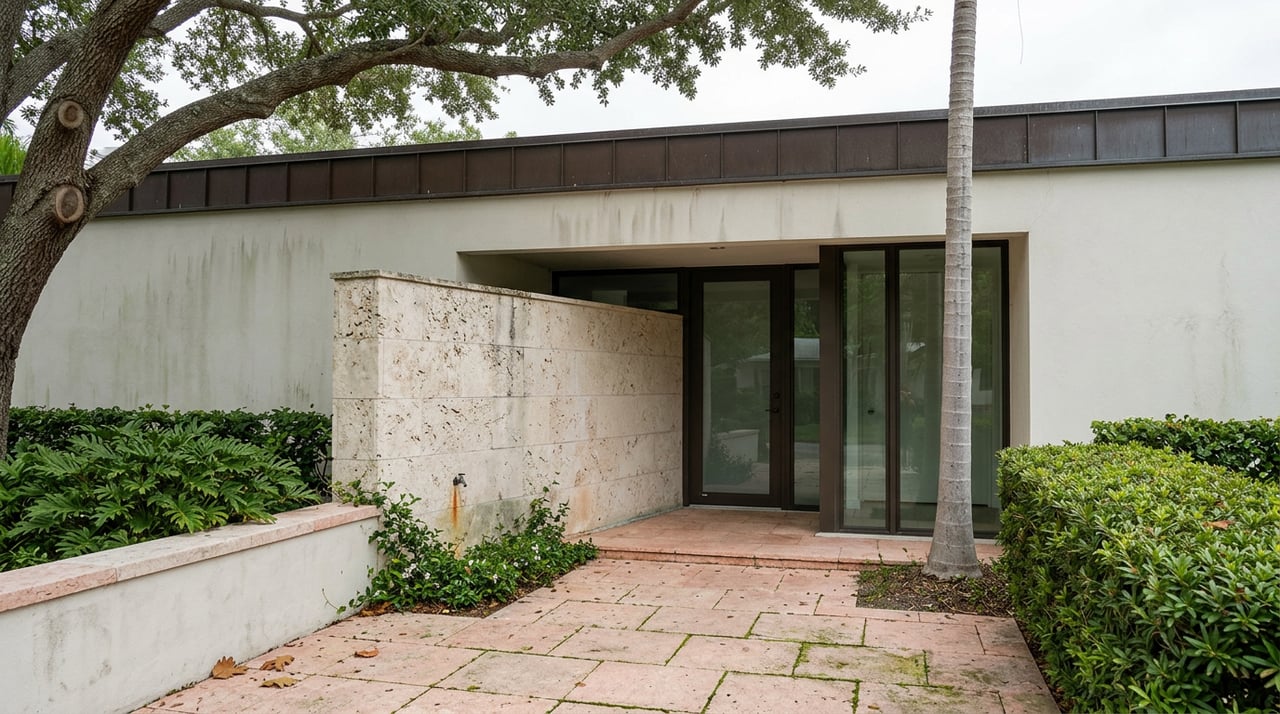
In January 2026, a waterfront estate on Munroe Drive closed for $71.9 million. Divide that by its 10,400 square feet and you get roughly $6,913 per square foot, a number that did not exist anywhere in Coconut Grove in 2023, 2024, or 2025. It set a new ceiling for the neighborhood's single-family market, and it did so without adding a single new lot to the Grove's supply.
That sale is the cleanest illustration of something a lot of buyers get wrong when they look up "Coconut Grove median price" and treat it as a single fact. It isn't. The number blends two markets that are appreciating for entirely different reasons, and understanding which one you're actually shopping in changes how you should read every comp you're handed.
Through April 2026, the median price per square foot for a single-family home in Coconut Grove sat at $1,219, up from $810 three years earlier, a gain of about 50.5 percent. That's already a striking number for a neighborhood with no beachfront and no new land. But it's the second number that matters more: trophy inland homes were trading up to $2,150 per square foot, a ceiling that has moved roughly 79 percent over the same three years, well ahead of the median's climb.
In plain terms, the top of the Grove's single-family market has been sprinting while the middle of the market has been jogging. A buyer who paid median price in 2022, something in the neighborhood of $700 per square foot, has watched their basis rise to around $1,220. A buyer at the trophy tier did materially better on a percentage basis, and the Munroe Drive closing shows that ceiling is still finding new territory in 2026, not settling into one.
The mechanism here has nothing to do with sentiment and everything to do with geography. Coconut Grove has no new land to build on. Every additional square foot of newly constructed single-family inventory comes from tearing down an existing home and rebuilding on the same lot, not from opening new ground. That process doesn't add supply. It just swaps old inventory for new inventory, one parcel at a time.
Which means the pool of buyers who want the newest, highest-spec inland home in the Grove is bidding for a fixed and shrinking number of teardown-ready lots, and that scarcity is what's detaching the ceiling from the median. It shows up differently depending on where in the Grove you're looking. West Grove is the tightest pocket by price per square foot, and sellers there are giving up a median discount of just 5.1 percent from asking. North Grove sellers are holding almost as firm, at a 4.1 percent discount. Bayfront and waterfront parcels tell a different story: those homes take roughly 114 days to go under contract, more than double the neighborhood median, yet sellers still only concede about 9.4 percent off asking. In the Grove, water views cost a buyer time, not leverage.
If single-family pricing is a story about scarce dirt, the Grove's condo market is a story about who gets to build next. The median condo price per square foot in Coconut Grove reached $1,226 in 2026, close to the single-family median, but the ceiling behaves nothing like the house market's ceiling. Park Grove, the three-tower complex on South Bayshore Drive developed by Terra Group and Related Group, has topped out around $3,850 per square foot, with one high-floor A-line unit reportedly closing near $3,800 per foot. That ceiling has only moved about 15 percent over three years, a fraction of the single-family trophy tier's climb.
The reason isn't that condo demand is weaker. It's that the ceiling isn't being pushed higher by existing towers reappraising themselves. It's being cloned by new construction arriving at the same price point. Four Seasons Private Residences Coconut Grove, a 20-story tower rising at 2699 South Bayshore Drive, went vertical in mid-2026, with construction crews working reinforced concrete columns and elevator cores above a completed ground floor. The project, developed by CMC Group's Ugo Colombo and Fort Partners' Nadim Ashi, is backed by a $323.8 million construction loan from Bank OZK secured earlier in the year, and it's pre-pricing its 70 residences, plus four penthouses up to 9,690 square feet, in the same $3,000 to $4,000 per square foot range Park Grove already occupies. It's slated for completion in 2028.
That's a fundamentally different growth engine than the one driving single-family prices. A trophy house ceiling rises because there's a fixed number of comparable lots and buyers keep bidding the survivors up. A condo ceiling holds roughly flat while an entirely new building enters the market at that same number, effectively duplicating the top tier rather than exceeding it.
| Single-Family (Inland Trophy) | Condo (Building Ceiling) | |
|---|---|---|
| 2026 median, per sq ft | $1,219 | $1,226 |
| Ceiling, per sq ft | Up to $2,150 (new waterfront record: $6,913) | ~$3,850 (Park Grove) |
| Three-year ceiling movement | +79.2% | +15% |
| What's pushing the ceiling | Fixed land, teardown-and-rebuild replacement | New branded supply pricing at the existing top |
If you're cross-shopping the Grove against another Miami-Dade neighborhood using a single median line, you're comparing a blended number that hides which of these two mechanisms you'd actually be buying into. A few practical distinctions matter more than the headline figure:
If you're chasing an inland teardown-adjacent lot, you're competing in a market where the ceiling has structurally detached from the median, and comps from even eighteen months ago may already be obsolete. The Munroe Drive sale is the extreme case, but it signals the direction, not an outlier that will revert.
If you're buying resale in an established tower like Park Grove or Grove at Grand Bay, the Bjarke Ingels-designed twin towers with 98 units and 12-foot ceilings, you need to think about how the market absorbs Four Seasons once it delivers in 2028. A new building entering at the same per-square-foot ceiling doesn't automatically lift existing units. It can just as easily give buyers a newer alternative at the same price, which puts pressure on resale timing for anyone holding an older unit at that tier.
If you're looking at mid-market or older condo stock rather than the trophy towers, pricing discipline matters more than it has in years. Reported months of supply in that segment sat near 10.9 months as of the Q1 2026 reporting period, which means buyers have real optionality and sellers who price for 2023 conditions will sit.
Is the comp I'm looking at a teardown-ready lot or a home that's already been rebuilt? These trade in different tiers, and treating them as interchangeable is how buyers overpay or underbid.
Is this condo priced against an established tower's trailing sales, or against a pre-construction building that hasn't delivered yet? Four Seasons pricing tells you where the market thinks the ceiling will be in 2028, not necessarily where an existing Park Grove unit should trade today.
What's the actual months-of-supply figure for this specific building or block, not the neighborhood average? A 10.9-month supply reading in the mid-market segment coexists with sub-five-month inventory in tighter pockets like West Grove. The neighborhood-wide number will mislead you either direction depending on what you're shopping.
Does the rising trophy ceiling mean my mid-market Grove home is worth more too? Not automatically. The data shows the ceiling and the median have been moving at different speeds for three straight years. A home in the $1M to $3M range should be priced against recent sales in that specific bracket, not against a headline number driven by a handful of ultra-high-end closings.
Will Four Seasons delivering in 2028 push up prices at Park Grove or Grove at Grand Bay? It's not guaranteed. New branded supply entering at an existing ceiling can just as easily give buyers a newer option at the same price point, which shifts demand rather than lifting it. How existing towers respond will depend on how quickly the 70 Four Seasons units get absorbed once they deliver.
Is now a good time to buy an older condo in the Grove? The mid-market and older condo segment had roughly 10.9 months of supply as of Q1 2026, which gives buyers real room to negotiate on price and terms, something that isn't true in tighter single-family pockets like West Grove or North Grove.
Coconut Grove's price data rewards a buyer or seller who reads past the median. If you're weighing a purchase or a sale here, and want a read on where a specific property or building actually sits inside these two markets, Martina Kanianska can walk you through the comps that matter for your situation. Let's Connect.
Ready to find your dream home or make a smart investment? Reach out to Martina today! Passion ignites success - Martina’s love for real estate fuels her drive. She doesn’t just sell properties; she creates lasting connections. With Martina by your side, confidence is your greatest asset. Don’t wait, contact Martina now to start your journey towards success!
601 Brickell Key Dr. Miami, FL 33131