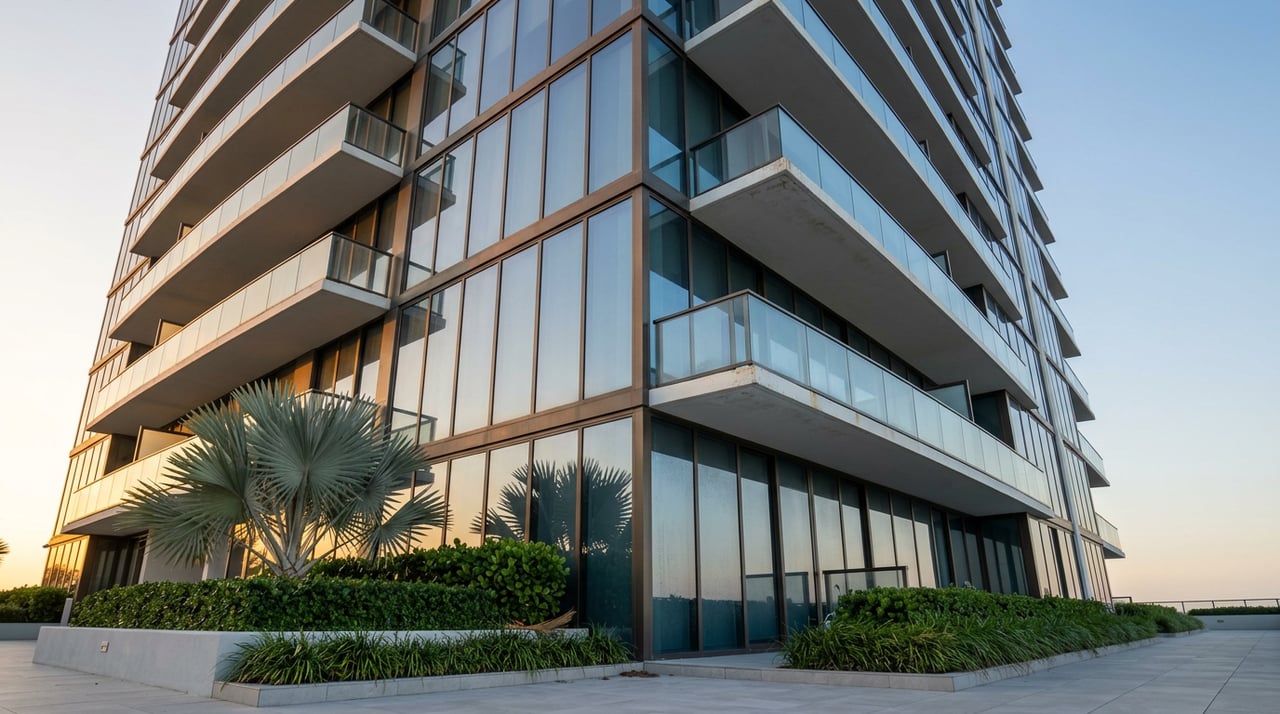
Brickell's Median Price Is Splitting in Two Directions at Once
September 10, 2026
September 10, 2026
What does a $594,167 median sale price actually buy in Brickell right now? The honest answer is that it depends entirely on which Brickell you're standing in, because as of May 2026 that neighborhood-wide number is quietly averaging two markets that are moving in opposite directions.
In late 2024, owners in two 16-year-old towers at 1060 Brickell opened a letter informing them of a $21 million special assessment. Some individual bills topped $40,000. The building's general counsel pointed to a straightforward explanation: Florida's post-Surfside reserve law required a structural integrity reserve study, and the study found real work needed on the Tower 2 facade, the roof, and the pool deck. One resident summed up the mood to CBS News:
"I feel like I'm being milked."
That single building is a preview of a pattern now playing out across older Brickell inventory, at the same moment a wave of branded new construction is pricing well above anything the neighborhood has seen. Anyone comparing Brickell to Coconut Grove, Key Biscayne, or Miami Beach based on a single median number is comparing an average of two very different products.
Florida's SB 4-D law followed the 2021 collapse of Champlain Towers South in Surfside, which killed 98 people. The legislature moved quickly, and by 2026 the law is fully in effect. Every condo building three stories or taller now needs a milestone structural inspection once it reaches 30 years old, and associations statewide were required to reach fully funded structural reserves by December 31, 2024.
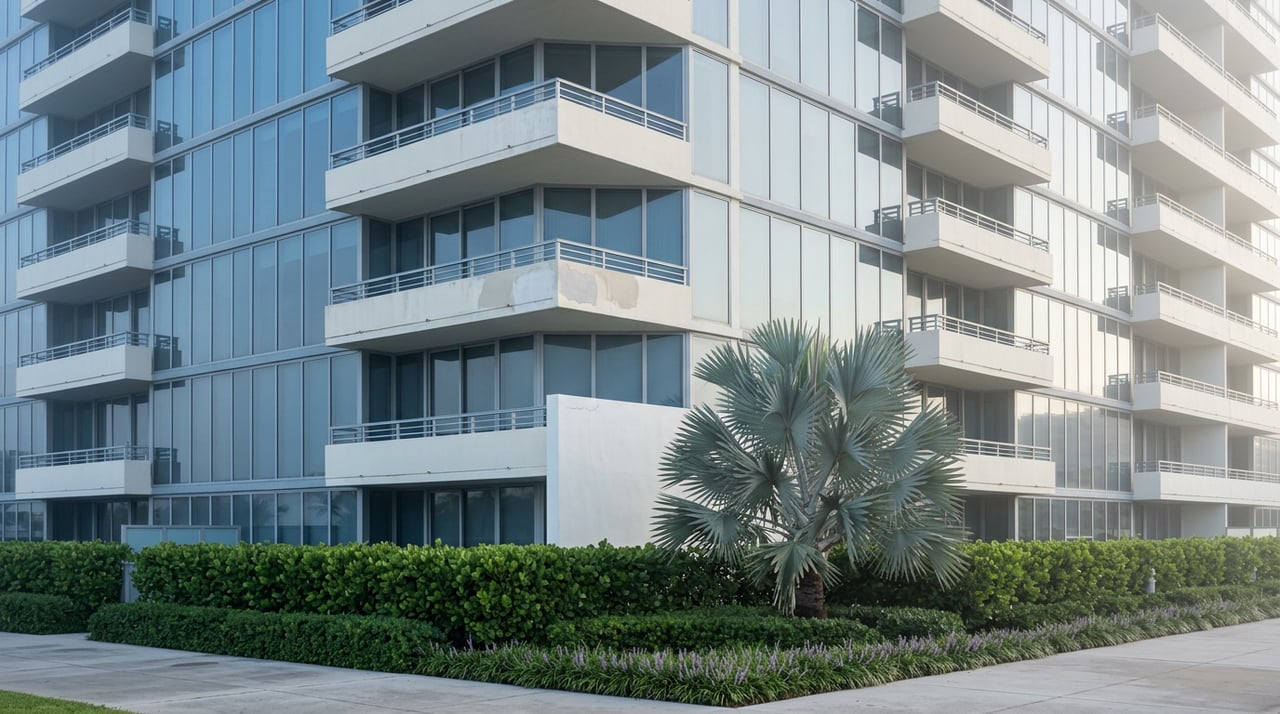
That deadline is why 2025 and 2026 have produced a run of assessments across Brickell and neighboring Edgewater. Minor remediation work tends to run $5,000 to $15,000 per unit, payable over a year or two. Buildings with significant concrete restoration, waterproofing, or roof replacement are seeing assessments of $30,000 to $75,000 per unit, and a handful of larger, older towers have crossed $100,000 per unit when the scope covered multiple systems at once.
The dollar figures attached to individual Brickell buildings in 2026 tell the story plainly. Brickell Heights East owners faced roughly $3,200 per unit for pool repairs slated for the second quarter. Plaza on Brickell budgeted about $8,500 per unit for elevator modernization. Santa Maria owners are paying $12,000 for a roof replacement, spread over two years. None of these numbers show up in a neighborhood median. They show up in the estoppel letter, after an offer is already in.
While a meaningful share of legacy towers are absorbing reserve-driven costs, the branded new construction tier is doing the opposite. A Q1 2026 market review found that many of Brickell's best-performing existing buildings were trading close to $1,100 per square foot, while the next wave of branded towers was establishing benchmarks at $2,100 per square foot and above. That is not a small gap. It is close to double.
The clearest evidence of where that ceiling actually sits arrived in March 2026, when two penthouses at the Residences at Mandarin Oriental on Brickell Key sold for $49.9 million each, a mainland pricing record that reset expectations for the entire ultra-luxury segment for the rest of the year. By July 2026, the full-floor and penthouse collection at 619 Brickell, the Foster + Partners tower anchored by a Nobu hotel and restaurant, was listed reaching $18.75 million and above.
The sellout pace at the marquee branded projects tells you demand isn't theoretical. As of the second quarter of 2026, St. Regis Residences Brickell was approximately 90 percent sold, and Cipriani Residences, the Italian hospitality family's first residential address in the United States, was more than 75 percent sold with delivery targeted for later in 2026. Some of that demand is tied directly to Brickell's transformation into a genuine financial hub, with Citadel building a global headquarters in the neighborhood and other major financial firms following.
Meanwhile, the legacy resale tier is showing real softness by comparison. Buildings including Flatiron, Echo Brickell, and Carbonell saw slower absorption in 2025 relative to 2024, according to one Q1 2026 report, which is another way of saying it is taking longer to find a buyer at the asking number. Bristol Tower is a more complicated case. Its year-over-year pricing looked lower, but that was skewed by a bankruptcy sale in 2025 and an unusually large combined-unit sale in 2024 totaling nearly 6,000 square feet, and units there actually sold faster in 2025 once you account for the outliers.
| Legacy resale towers | New branded towers | |
|---|---|---|
| Typical price per square foot (Q1 2026) | Around $1,100 | $1,500 to $2,100+ |
| Reserve law exposure | Active: SIRS findings, milestone inspections, possible assessments | Minimal at delivery: reserves start funding at zero known liability |
| Capital timing | Cash or financed at closing | Deposits paid in installments before delivery, often 20 to 50 percent of price before the building is complete |
| Neighborhood median sale-to-list ratio (June 2026) | 95.1%, with 92.7% of sales closing below list | Not yet reflected in resale comps |
| Typical marketing time | 129 days to pending, versus an 85-day Miami-Dade benchmark for existing condos | Governed by developer release pace, not days on market |
The median sale-to-list ratio and the 129-day time to pending both describe the resale side of the market. They say nothing about a St. Regis or Cipriani unit, because those transactions aren't closing yet and won't show up in resale statistics until well after delivery. A neighborhood median built mostly from resale data, sitting next to a pre-construction tier pricing at double the per-square-foot rate, is bound to look strange from either direction.
If you're weighing Brickell against Coconut Grove or Key Biscayne using a single median or per-square-foot figure, you're really choosing between two different risk profiles that happen to share a zip code, not one coherent market.
The legacy tier offers known inventory, immediate occupancy, and negotiating room. Nearly 60 percent of Brickell condo purchases in 2025 closed in cash, which tells you this segment still draws buyers who can move quickly. What it doesn't offer is certainty about future costs. A building's reserve funding percentage and its most recent structural inspection findings matter more to your total cost of ownership than the listing price does.
The branded tier offers a fixed entry price today and reserves starting at zero known liability, since a new association's first reserve study happens after formation under current code. What it doesn't offer is occupancy now. You're committing capital over a multi-year build schedule, and market conditions at delivery may not match the ones you signed under.
Neither answer is wrong. But comparing a $594,167 resale median against a $2,100-per-square-foot new construction benchmark and concluding anything meaningful about "Brickell pricing" skips the actual decision in front of you.
Is a special assessment always a sign of a poorly run building? Not necessarily. Florida's reserve law is now applying the same structural inspection standard to buildings statewide, so even well-managed associations are surfacing costs that weren't previously required to be funded this aggressively.
Does a new branded tower guarantee no future assessments? No. A new association starts reserve funding at zero known liability, but that only means the near-term risk is lower, not that costs never arrive. Every building eventually needs a roof, elevators, and mechanical systems replaced.
Does a higher price per square foot always mean better value? Not on its own. A higher per-square-foot price at a branded tower can reflect lower near-term reserve risk, service level, and land position. A lower per-square-foot price in a legacy tower can still be the better deal once you know its reserve status and there are no undisclosed assessments pending.
If you're trying to figure out which side of Brickell actually fits your budget and your timeline, or how it stacks up against Key Biscayne, Coconut Grove, or Miami Beach for what you're trying to do, Martina Kanianska can walk you through the building-level numbers that the neighborhood median leaves out. Let's Connect.
Ready to find your dream home or make a smart investment? Reach out to Martina today! Passion ignites success - Martina’s love for real estate fuels her drive. She doesn’t just sell properties; she creates lasting connections. With Martina by your side, confidence is your greatest asset. Don’t wait, contact Martina now to start your journey towards success!
601 Brickell Key Dr. Miami, FL 33131