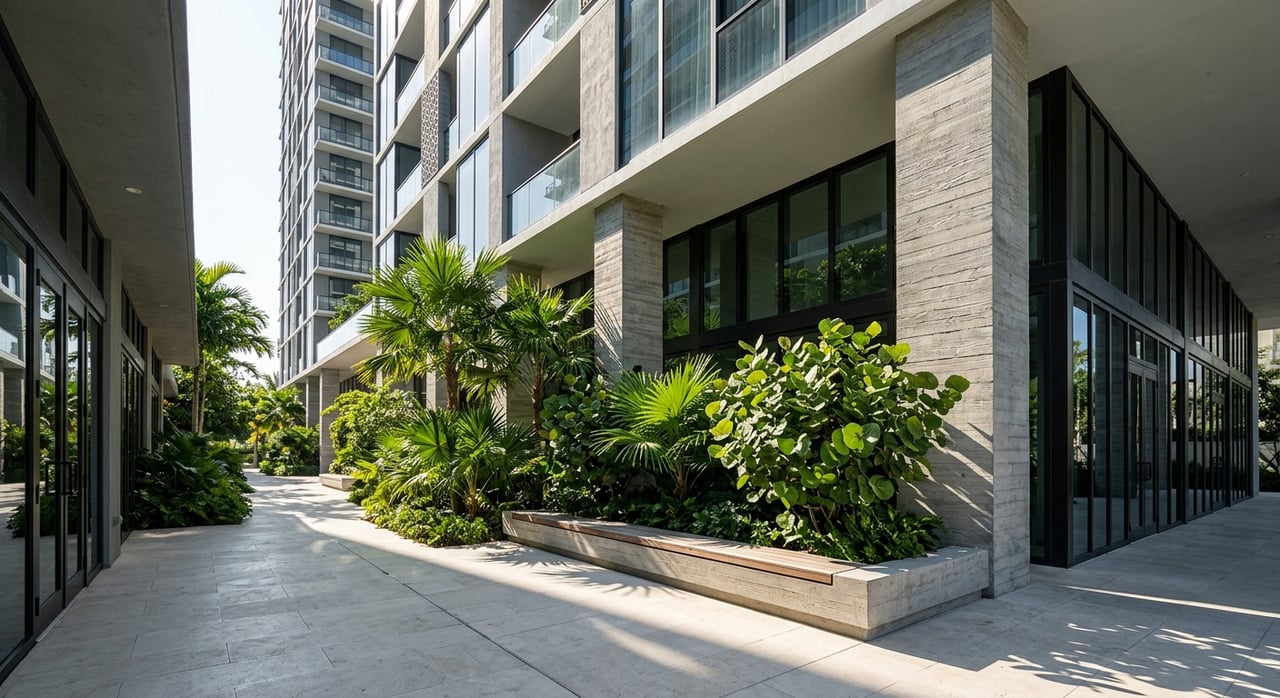
Is Car-Free Living in Miami Beach Right for You?
April 23, 2026
April 23, 2026
If you love the idea of Miami Beach but not the idea of daily traffic, parking, and car expenses, you are not alone. For many buyers and renters, the real question is not whether Miami Beach is beautiful, but whether it is practical without a car. The good news is that in the right part of the island, a car-free or car-light lifestyle can be very realistic. In this guide, you’ll learn how Miami Beach mobility works, where it is easiest to go without a car, and what tradeoffs to expect. Let’s dive in.
Miami Beach is one of the more realistic places in South Florida for car-free living. According to the City of Miami Beach transportation guidance, about 45% of residents, commuters, and visitors already walk, bike, or use transit as their primary way to get around.
That matters if you are thinking about your day-to-day quality of life. The city also places pedestrians first in its transportation hierarchy, followed by transit, bicycles, freight, and private vehicles. In practical terms, that means the city’s mobility planning supports walking, biking, and transit in a way that can make a no-car routine more realistic than many people expect.
One of the biggest reasons car-free living can work here is the Miami Beach Beachwalk. It is a nine-mile oceanfront pedestrian promenade that runs from South Pointe Park to 87th Street, stays open 24 hours, and is ADA-accessible.
For everyday life, Beachwalk is more than a scenic feature. It gives you a long, continuous path that can support walks between neighborhoods, quick local trips, and recreational use without depending on a car. The city also notes that it connects Miami Beach to Surfside and Bal Harbour, which adds to its usefulness for local movement.
A major part of living without a car in Miami Beach is the free city trolley system. The city operates four routes: South Beach Loop, Middle Beach Loop, Collins Express, and North Beach Loop.
These trolleys run seven days a week from 8 a.m. to 11 p.m., typically every 20 minutes. Each trolley also includes two bike racks, which makes it easier to combine biking and transit when you need to cover more ground.
If you want one route to understand first, look at the Collins Express. The city says it reduces transfers between North Beach, Middle Beach, and South Beach and helps shorten travel times.
That is important because it makes Miami Beach feel more connected as one system. If you plan to live on one part of the island and regularly spend time in another, this route can make your routine much easier.
Beyond the trolley, Miami Beach has a few mobility options that can make car-free living more practical.
In Mid-Beach and parts of North Beach, the city offers Freebee on-demand transit. This is a free, geofenced, door-to-door service that connects riders to trolley and county bus hubs including Lincoln Road/Alton, Washington/17th, Indian Creek/41st, Indian Creek/63rd, and Collins/69th.
For airport trips and mainland connections, Miami-Dade Transit Route 150 Miami Beach Airport Express is one of the most useful options. It serves Miami International Airport along with Miami Beach destinations such as 41st Street, Alton Road, Collins Avenue, Lincoln Road, Washington Avenue, and South Pointe Drive.
Miami Beach also launched a free commuter water taxi between Maurice Gibb Memorial Park in Miami Beach and Venetian Marina & Yacht Club in Miami. The city says the trip takes about 20 minutes and connects with local transit options on both sides.
Biking is another reason a no-car lifestyle can work in Miami Beach. The city says it has completed multiple green bike-lane projects and provides more than 900 bicycle U-racks, plus free long-term bike parking and repair stations in six garages through its bicycle support program.
The Citi Bike program also adds flexibility. Miami Beach offers resident perks, and the system can be useful for short hops when walking feels too long and transit timing does not line up perfectly.
That said, you do need to know the rules. According to the city’s bicycle and pedestrian guidance, bikes and micromobility devices are prohibited in certain places, including Beachwalk, city sidewalks, Collins Park, Marina Baywalk south of 5th Street, the Beachwalk promenade between 24th and 29th Streets, and South Pointe Park. The city also bans bikes on Lincoln Road and on Ocean Drive sidewalks from 5th to 15th Streets, with a limited early-morning exception for Lincoln Road.
Where you live matters more than almost anything else. In Miami Beach, the easiest car-free lifestyle usually happens near strong walking routes, trolley service, and everyday destinations.
South Beach is the strongest fit for a car-free lifestyle. The South Beach Trolley serves a dense group of daily destinations including Lincoln Road Mall, the Miami Beach Convention Center, New World Symphony, museums, parks, grocery stores, pharmacies, banks, hotels, and marinas.
Add in the pedestrian focus of Lincoln Road, the walking environment around Ocean Drive, and direct access to Beachwalk, and South Beach becomes the part of Miami Beach where going without a car feels most natural. If you want the fewest compromises, this is usually the first area to consider.
Mid-Beach is less purely pedestrian than South Beach, but it can still work if you choose your location carefully. The Middle Beach Loop serves places like Mount Sinai Hospital, the 41st Street corridor, the convention center, the library, and nearby schools.
The city’s focus on the 41st Street corridor also supports better pedestrian mobility, safety, and streetscape quality. If you live near one of these better-served corridors, Mid-Beach can offer a comfortable car-light lifestyle with good access to key destinations.
North Beach tends to have a quieter, more residential feel. The North Beach Loop connects local destinations such as Allison Park, the Publix on 69th Street, North Shore Open Space Park, the branch library, and Normandy Isle Park and Pool.
Beachwalk also reaches north to 87th Street, which helps extend walkability. For many people, North Beach works best if you are comfortable with a more local pattern of errands and a slower pace than South Beach.
Car-free does not always mean effortless. Miami Beach supports this lifestyle best when your routine stays mostly on the island and near the main service corridors.
The trolley system runs until 11 p.m., Freebee has defined service zones and hours, and the water taxi currently operates as a weekday commuter option. Based on those limits, some residents may still rely on backup transportation for late-night returns, airport timing, or destinations outside the best-served parts of the island.
That is why many buyers think in terms of car-light rather than strictly car-free. If you can walk, bike, or take transit for most of your daily needs, you may still be able to reduce your dependence on a car significantly even if you want occasional flexibility.
If a no-car or low-car lifestyle is part of your home search, focus on location first. In Miami Beach, that often means looking closely at homes near Lincoln Road, Washington Avenue, Collins Avenue, 41st Street, 69th Street, and other well-served trolley or on-demand transit hubs.
You should also think through your real routine, not just your ideal one. Where do you shop, work, exercise, travel, and spend weekends? The more your daily destinations line up with Miami Beach’s walking, trolley, and bike network, the more practical car-free living becomes.
If you want help narrowing down Miami Beach condos or homes based on walkability, transit access, and your day-to-day lifestyle, Martina Kanianska can help you identify the areas that fit your goals and make your search more strategic.



Ready to find your dream home or make a smart investment? Reach out to Martina today! Passion ignites success - Martina’s love for real estate fuels her drive. She doesn’t just sell properties; she creates lasting connections. With Martina by your side, confidence is your greatest asset. Don’t wait, contact Martina now to start your journey towards success!
601 Brickell Key Dr. Miami, FL 33131